Found an Old Prescription in Your Drawer? Here Is Why That Bottle May Be More Dangerous Than Empty
Photo: old prescription medication bottles drawer medicine cabinet expired, via thumbs.dreamstime.com
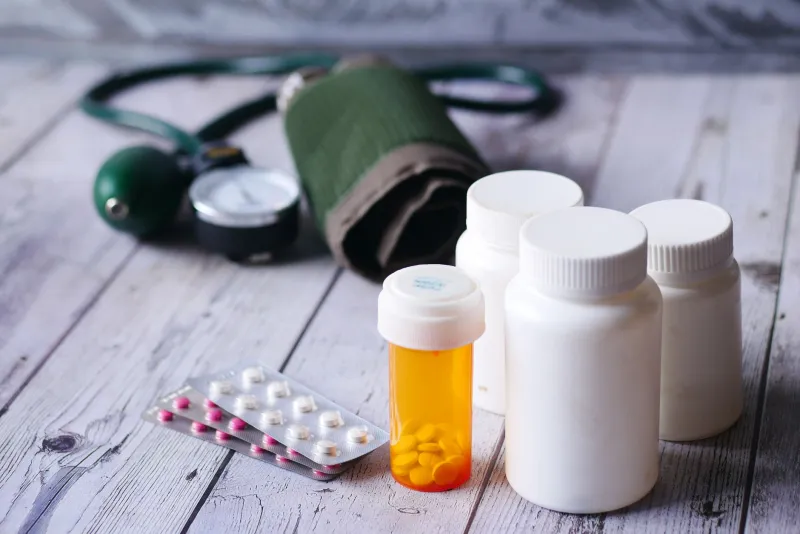
The scenario is familiar to most American households. You open a bathroom cabinet or bedside drawer and find a prescription bottle with your name on it — maybe an antibiotic from a respiratory infection two winters ago, a muscle relaxant from a back injury, or a short course of steroids from a flare-up that resolved on its own. The bottle is partially full. The condition you are experiencing right now feels similar to the one that prompted the original prescription. The temptation to skip the doctor's visit and use what you already have is entirely understandable.
It is also, in many cases, medically inadvisable — and the expiration date printed on the label is the least important reason why.
Why "Same Condition" Is Rarely a Safe Assumption
Patients tend to categorize their health experiences by symptom rather than by underlying cause. A sinus infection two years ago and a sinus infection today feel identical. A lower back spasm last spring and one this fall seem like the same problem. But from a clinical perspective, these are independent diagnostic events, and the prescription written for the first does not automatically apply to the second.
Several factors make the "same condition" assumption unreliable:
Causative organisms change. The antibiotic prescribed for a bacterial infection two years ago targeted whatever organism was present at that time. If a different bacterium is responsible for your current infection — or if the original organism has developed resistance patterns common in your community — the same drug may be partially or entirely ineffective. Completing an inadequate antibiotic course is not neutral; it can accelerate resistance and delay appropriate treatment.
Diagnoses evolve. What presented as a straightforward muscle spasm may, on closer examination, reflect a developing spinal condition. What appeared to be acid reflux may have progressed to something requiring a different therapeutic approach. Using an old prescription assumes the original diagnosis was correct, complete, and still applicable — assumptions that a current clinical evaluation would test.
Symptoms overlap across conditions. Chest tightness, shortness of breath, and fatigue can accompany a wide range of diagnoses, some benign and some requiring urgent attention. Self-diagnosing a recurrence based on symptomatic similarity and self-medicating with an old prescription can delay the identification of a new, distinct condition.
How Your Body Has Changed Since That Prescription Was Written
Even if the condition were identical, the body receiving the medication today is not the same body that received it when the prescription was originally filled. This is not a philosophical point — it is a pharmacokinetic one.
Body weight directly affects the volume of distribution for many medications. A patient who has gained or lost a significant amount of weight since a prescription was written may find that the original dose produces a meaningfully different blood concentration than it did previously. For drugs with narrow therapeutic windows, that difference matters.
Kidney and liver function decline gradually with age and can deteriorate more rapidly with certain health conditions, including diabetes, hypertension, and some autoimmune disorders. Both organs are central to how medications are processed and eliminated. A dose that cleared your system appropriately at 45 may accumulate to problematic levels at 55 if kidney function has declined even modestly.
New diagnoses create new contraindications. A patient who was not diabetic when a corticosteroid was originally prescribed may have developed diabetes since then — making even a short steroid course a significant blood sugar management challenge. A patient who was not taking a blood thinner when an NSAID was prescribed may now be on anticoagulation therapy, creating a bleeding risk that did not exist at the time of the original fill.
New prescriptions interact with old ones. The medication landscape of your daily regimen may have shifted substantially since that bottle was filled. A drug that was safe in isolation may be contraindicated alongside something you now take regularly.
The Chemical Degradation Question — and Why It Is Complicated
The expiration date on a prescription bottle is the point at which the manufacturer can guarantee full potency and stability under recommended storage conditions. It is not, in most cases, a cliff beyond which the medication becomes immediately toxic.
For the majority of solid oral medications — tablets and capsules stored in a cool, dry location — research suggests that many retain substantial potency for years beyond the labeled expiration date. A landmark study conducted by the U.S. military found that a large proportion of medications tested remained chemically stable well past expiration. This has been used, in some contexts, to argue for the continued use of expired medications in resource-limited settings.
However, this general finding comes with critical caveats:
- Liquid formulations — including oral suspensions, eye drops, and injectable preparations — degrade far more rapidly and unpredictably than solid forms
- Certain medications are genuinely dangerous past expiration. Tetracycline antibiotics, for instance, have been associated with a degradation product linked to renal toxicity. Nitroglycerin tablets lose potency rapidly and must be replaced on schedule. Insulin and other biologics require strict expiration adherence.
- Storage conditions matter enormously. A tablet stored in a bathroom medicine cabinet — where heat and humidity fluctuate — may degrade significantly faster than the expiration date assumes. The garage, the glove compartment, and the kitchen windowsill are all pharmacologically hostile environments.
- Reduced potency is itself a problem for medications where consistent blood levels are essential. An antibiotic at 70 percent of labeled strength does not simply provide 70 percent of the benefit — it may provide conditions favorable for resistant bacterial survival.
A Practical Checklist Before Reaching for That Old Bottle
Rather than framing this as a binary keep-or-discard decision, consider the following questions before using any previously dispensed medication:
1. Has it been more than six months since this was prescribed? If yes, the clinical picture that prompted the prescription should be re-evaluated before the medication is reused — regardless of whether the condition appears similar.
2. Have you received any new diagnoses since this was filled? New health conditions may contraindicate the medication or require dose adjustments that were not relevant at the time of the original prescription.
3. Are you taking any new medications — prescription or OTC — that were not part of your regimen when this was prescribed? Interaction profiles that did not exist when the prescription was written may now apply.
4. Has your weight changed significantly, or has your kidney or liver function been flagged as a concern? Either factor can materially affect how the drug behaves at the originally prescribed dose.
5. Is this a medication class where consistent, appropriate dosing is essential to treatment success? Antibiotics, anticoagulants, psychiatric medications, and thyroid hormones are examples where self-directed resumption of an old prescription carries heightened risk.
If the answer to any of these questions is yes, the appropriate path is a conversation with your prescriber or pharmacist before taking the medication — not after.
Safe Disposal Is Part of Responsible Medication Management
For medications that should not be reused, proper disposal matters both for safety and for environmental reasons. The FDA maintains guidance on medication disposal, including a searchable database of authorized drug take-back locations at pharmacies and law enforcement facilities nationwide. For medications without a designated take-back option, the FDA provides specific instructions for mixing medications with an undesirable substance (such as coffee grounds or dirt) and sealing them in a container before placing them in household trash — a method that reduces both accidental ingestion risk and water supply contamination.
The drawer full of old prescription bottles is a common feature of American medicine cabinets. Treating that accumulation as a personal formulary is a common — and genuinely risky — habit. The question is never simply whether the pill is still good. The question is whether the prescription it represents still fits the patient who is considering taking it.